Ten prompts that think back
A viral list of thinking prompts for Claude, rebuilt so each one gets an answer you can act on. Context in brackets, evidence instead of praise, a defined output, and a next step, plus two bonus prompts that chain and upgrade the rest.

A carousel of ten Claude prompts has been doing the rounds: Mind Reader Protocol, Extreme Devil's Advocate, Expert Panel Simulator and seven more. They are good instincts, and they mostly give you generic answers, because each one is a single sentence asking for depth without supplying anything to be deep about.
A one-line prompt gets a one-size-fits-all answer. Ask Claude to "challenge every assumption in my thinking about pricing" and it has to guess what you think about pricing, so it challenges assumptions most people hold. That reads as insight and is worth very little.
So we rebuilt all ten. The ideas are the same; the mechanics are not. Every prompt below now does four things the originals didn't.
It carries context. The blanks in [brackets] are the part that does the work. Fill them in with two honest lines and the answer is about you, not about people in general.
It asks for evidence instead of praise. Each prompt tells Claude to tie its claims to what you said, to flag weak evidence instead of guessing, and to skip the flattery.
It defines the answer. Numbered parts, a ranking, a 7-day or 90-day frame. You know what you'll get back, and you can compare two runs.
It ends with something to do. One habit, one experiment, one move for Monday. A thinking prompt that doesn't change what you do tomorrow was only interesting to read.
They are grouped into four stages you can run in order on a real problem: understand how you think, stress-test it, widen the view, then learn and distill. Credit for the original list goes to create_daniel2.
Part 1 — Understand how you think
Two prompts that point Claude at you rather than the problem. Run them late in a long conversation, in a project with memory, or with a page of your own writing pasted in. On a fresh chat there is nothing to read, and you will get a horoscope.
1 · Thinking Profile

Was: Mind Reader Protocol. The original asked Claude to describe your thinking style. The upgrade makes it prove each point with your own words and admit when the evidence is thin, which turns a personality reading into something closer to a coach's notes.
Act as an executive coach who has just read everything I've written in this conversation [or: the notes/emails I'll paste below].

Using only evidence from my own words, describe:
1. Thinking style — how I frame problems, what I notice first, what I skip.
2. Decision pattern — how fast I commit, what I weigh most, where I lean on gut vs. data.
3. Blind spots — 3 specific ones, each backed by a quote or example from me.
4. Underused strengths — 2 of them.

Rules: no flattery and no generic personality-test language. If the evidence for a point is thin, say so instead of guessing.

Finish with the one habit I could change this week that would pay off most.
2 · Behavior Decoder
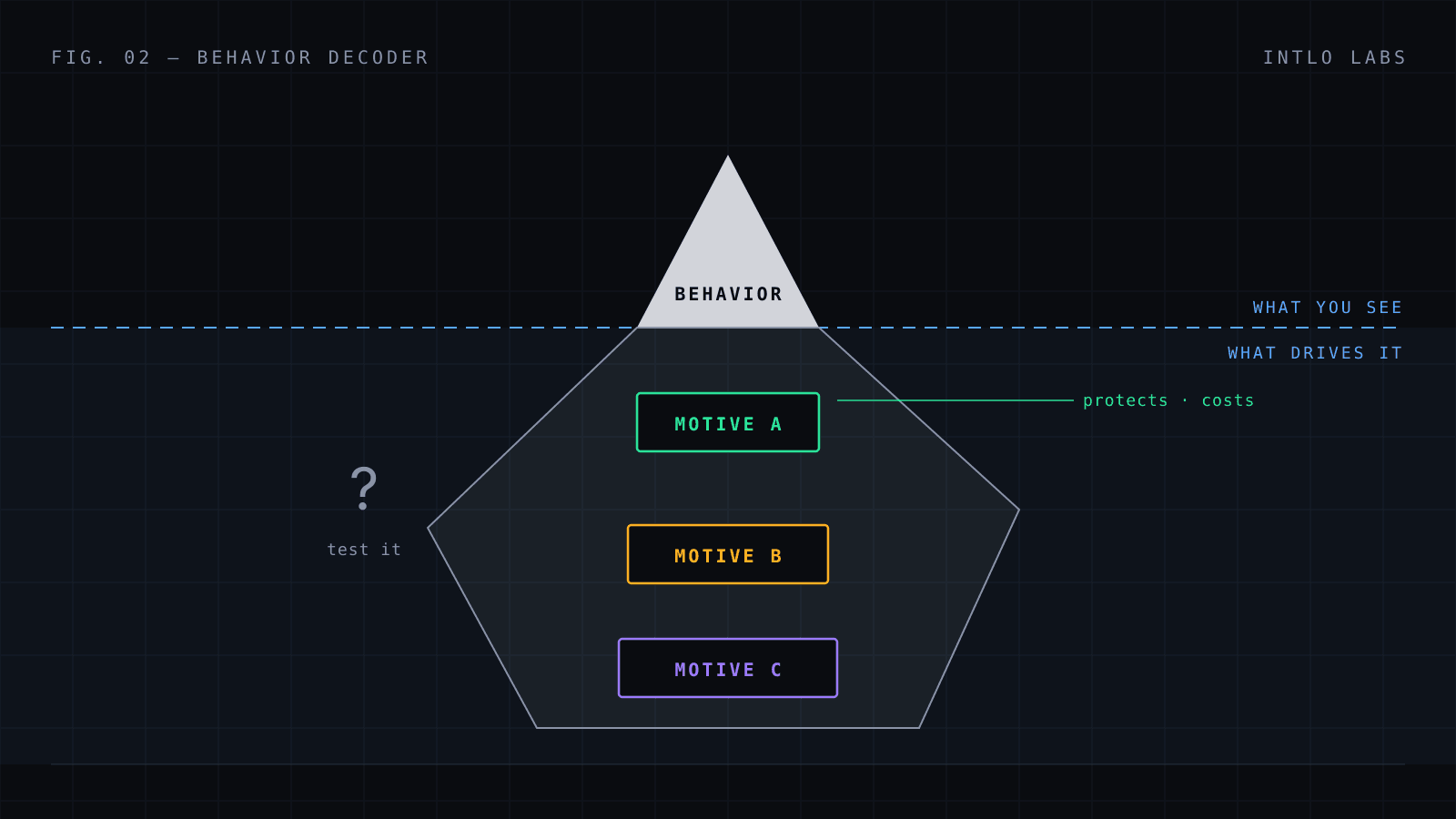
Was: Deep Psychology Decoder. Asking a model for your "subconscious patterns" invites confident pop psychology. This version gives it the behaviour and your own explanation, asks for ranked hypotheses rather than a diagnosis, and ends in an experiment that tells you which one is true.
Here's a situation I keep handling the same way: [situation/problem].
What I usually do: [behavior].
What I tell myself about why: [stated reason].

Help me see what might really be driving it:
1. Three plausible underlying motives (e.g., control, avoiding a specific fear, identity, short-term reward), ranked by how well they fit what I've described.
2. For each: what it protects me from, and what it costs me.
3. The questions I should ask myself to tell which one is true.

Treat these as hypotheses, not a diagnosis. End with one small experiment that would show which motive is actually in charge.
Part 2 — Stress-test it
Three prompts for the moment you are sure. All three tell Claude to be hard on you and, just as important, not to invent weaknesses. An adversary told only to push back will push back on everything, and you learn nothing from that.
3 · Assumption Breaker
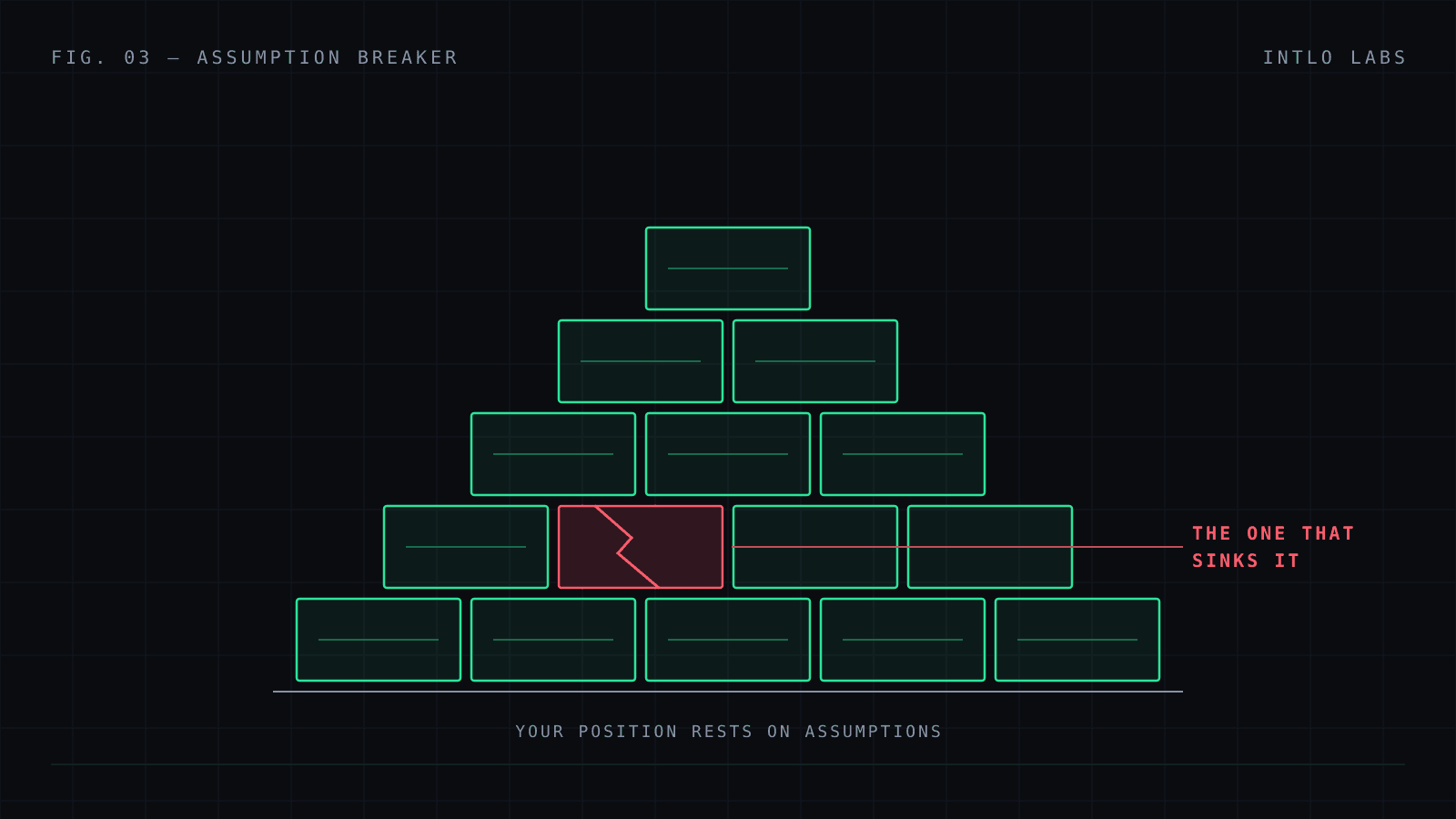
Was: Extreme Devil's Advocate. You state the position and your reasons, so Claude attacks your argument instead of a generic one. It now rates each assumption, ties every bias to a specific step in your reasoning, and finishes on the single assumption that would sink the whole position.
My position on [topic]: [state it in 1–3 sentences].
Why I believe it: [your reasons].

Be a sharp, fair critic:
1. List every assumption my position depends on, stated and unstated.
2. For each, rate how confident I should really be (high/medium/low) and name the evidence that would prove it wrong.
3. Name the cognitive biases most likely at play, each tied to a specific part of my reasoning.
4. Offer 2 radically different framings of the problem that would lead to a different conclusion.

Don't soften it, and don't invent weaknesses that aren't there.

End with the single assumption that, if wrong, sinks the whole position.
4 · Steelman the Other Side
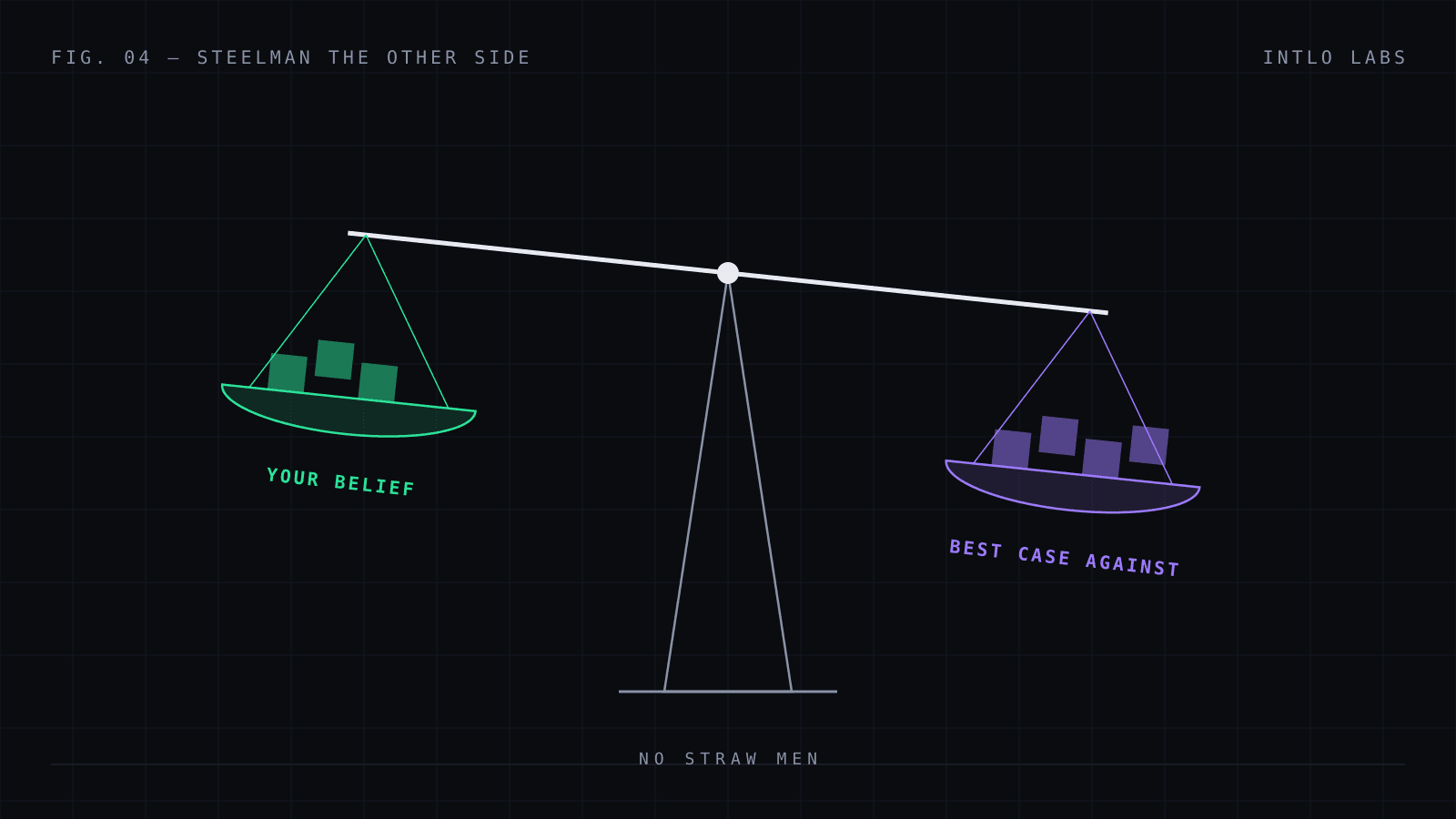
Was: Contrarian Position Builder. A contrarian argument is easy to write and easy to dismiss. A steelman, the version a smart opponent would actually make, is harder to wave away. The new last line matters most: it makes Claude hand you back the strongest form of your belief that survives.
I strongly believe [belief]. Build the strongest possible case against it — the version a smart, well-informed opponent would make, not a straw man.

Include:
- The core argument in 3–5 points, strongest first
- The best evidence or real-world examples for each (flag anything you're not sure is accurate)
- The perspective shift that makes the opposing view feel reasonable
- Where my belief still holds up after all that

Finish with the strongest version of my belief that survives this challenge.
5 · Loop Breaker
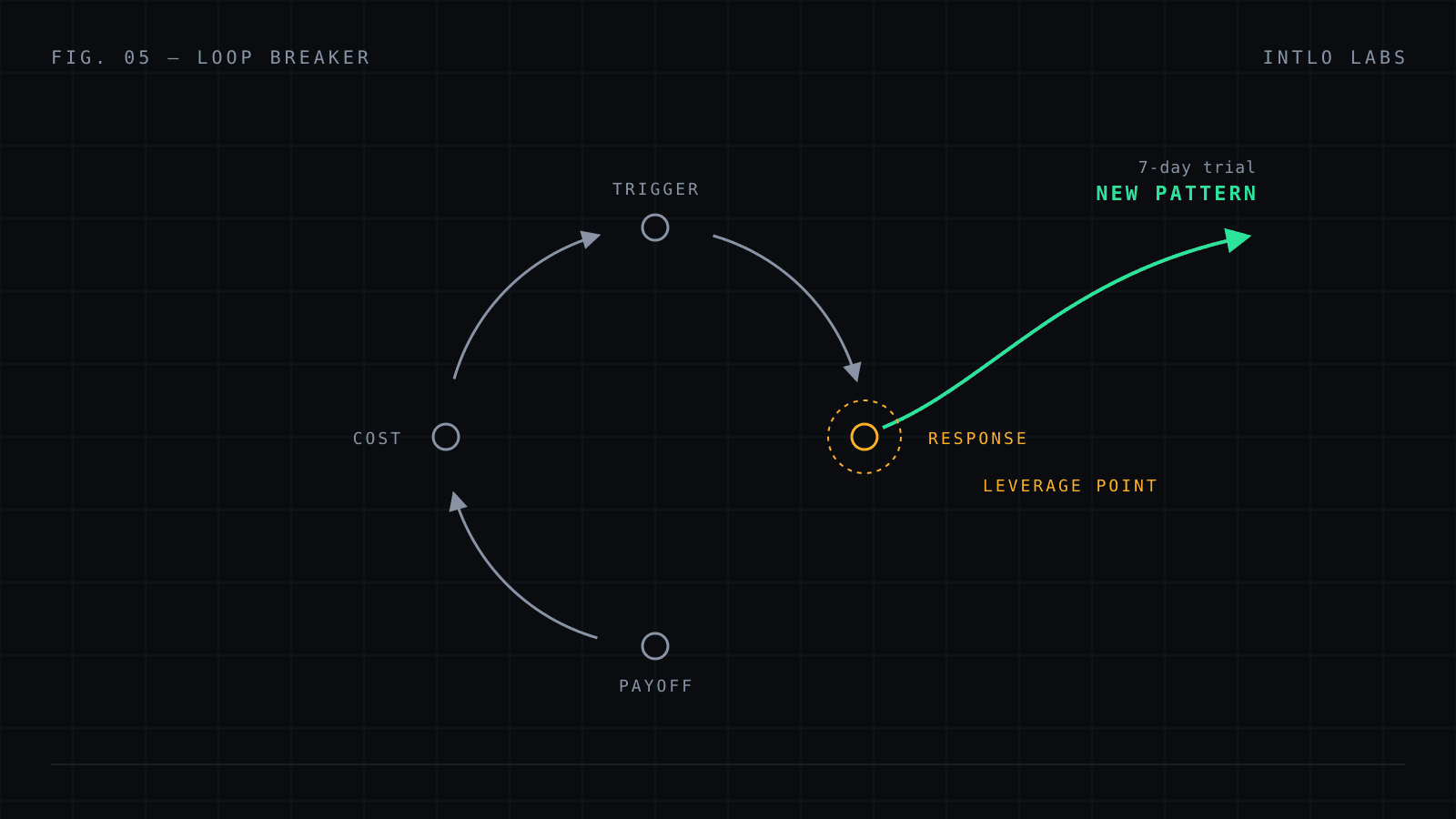
Was: Pattern Interruption. "Create an unconventional intervention" gets you a clever idea with no idea of why the loop exists. This version maps the loop first, finds the one step where a small change breaks it, and gives you three fixes of different sizes and a 7-day trial.
I'm stuck in a loop: [recurring problem].
How often / how long: [frequency, duration].
What I've already tried: [attempts].
Why I think those failed: [your guess].

1. Map the loop: trigger → my response → short-term payoff → long-term cost.
2. Find the leverage point — the step where a small change breaks the cycle.
3. Design 3 interventions: one tiny (under 5 minutes), one structural (changes my environment or system), one unconventional (something I'd never think of).
4. For the one you'd bet on, give me a 7-day trial plan and the signal that tells me it worked.
Part 3 — Widen the view
Three prompts that get Claude to look at your problem from somewhere you are not standing. The upgrade in all three is the same: make the perspectives disagree, then make them converge on a move.
6 · Expert Panel
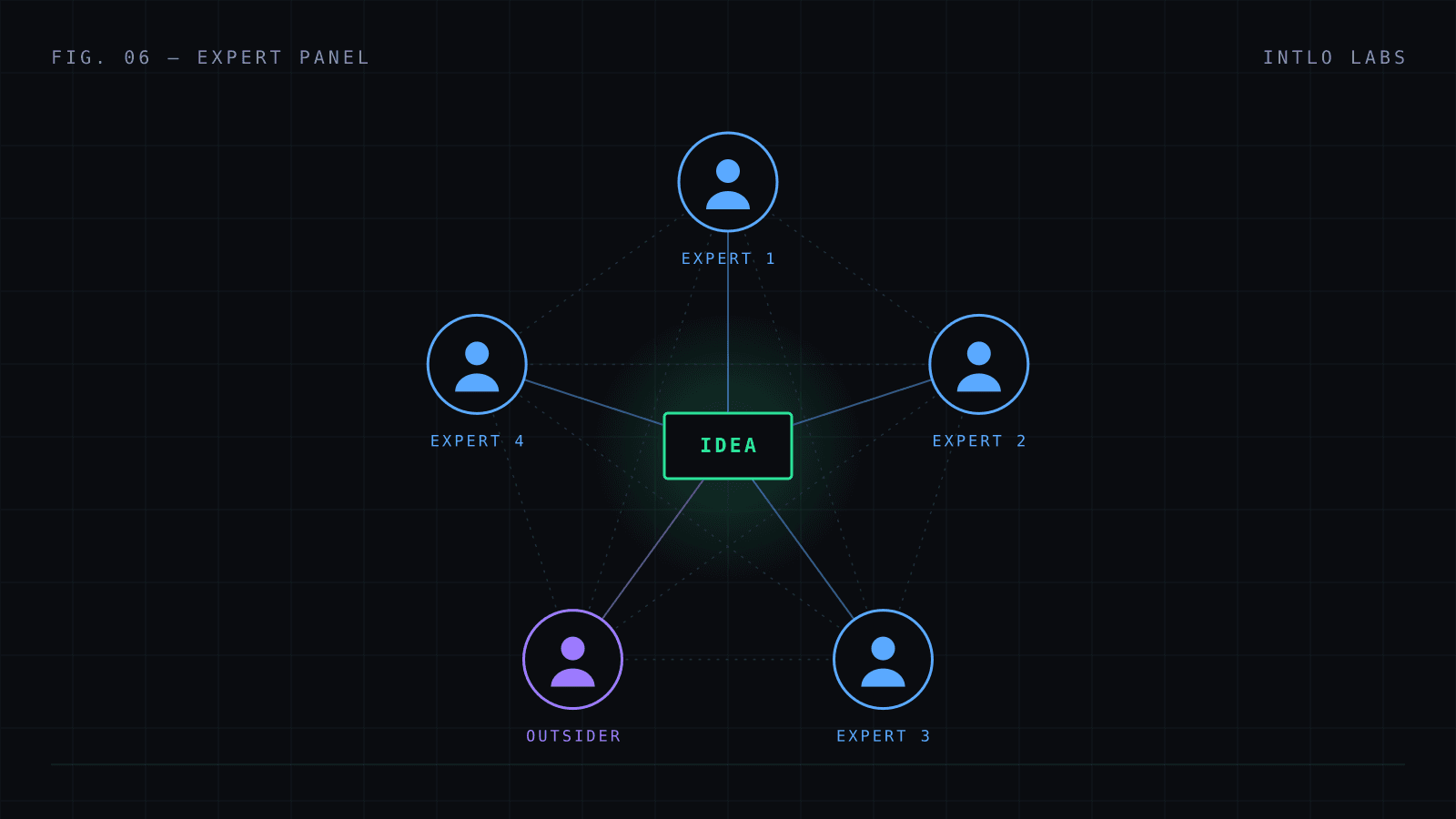
Was: Expert Panel Simulator. Five experts who each give a polite paragraph is five essays. The upgrade lets Claude choose fields that fit your problem, adds an outsider on purpose, and makes the panel argue before it agrees on what you should do next.
My [idea/problem]: [describe it].
Goal: [what success looks like].
Constraints: [budget, time, team].

Assemble a panel of 5 experts from fields that would see this very differently. Pick the fields that fit this problem best, and include at least one outsider from an unrelated field. For each expert:
- Role, and why they're on the panel
- Their verdict in one sentence
- The insight only they would notice
- The question they'd ask that I can't answer yet

Then run one round where they argue with each other. Finish with where the panel agrees, where it splits, and what I should do next.
7 · Borrowed Mindset
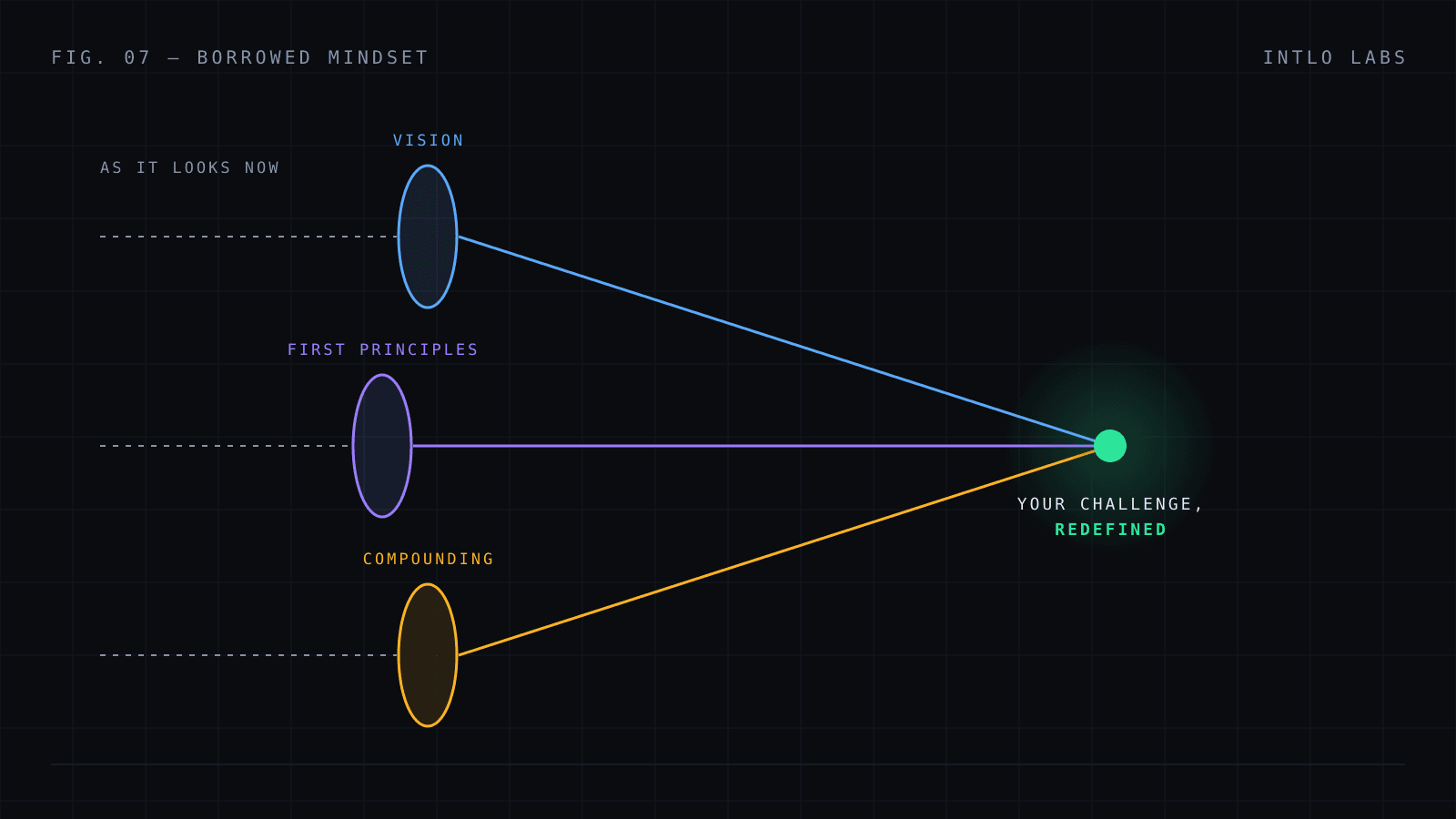
Was: Reality Distortion Generator. One borrowed hero tends to produce a caricature: Steve Jobs says simplify. Three very different mindsets, held to what they actually said and did, give you contrast, and each one owes you a concrete first move.
My challenge: [challenge/situation].

Show me how 3 people with very different extraordinary mindsets would attack it — for example a product visionary (Steve Jobs), a first-principles thinker (Richard Feynman) and a patient compounder (Warren Buffett) — or pick 3 who fit this better.

For each:
- How they'd redefine the problem
- What they'd refuse to accept that I'm currently accepting
- The bold first move they'd make on Monday

Base it on their known principles and documented decisions, not caricature.

Close with the one move from any of them I could actually make this week.
8 · Real Competition Map

Was: Competitive Framework. Most people's real competitor isn't on their list: it's inertia, the customer deciding to do nothing, or their own calendar. This version names those, separates real constraints from self-imposed ones, and ends in a 90-day plan with signals you can measure.
Area: [area of life/business].
What I'm aiming for: [goal].
Who I think I'm competing against: [competitors].

1. Tell me who or what I'm actually competing against, including non-obvious rivals: substitutes, inertia, the customer's "do nothing" option, my own time and attention.
2. Name my self-imposed limits — rules I'm following that nobody is forcing on me — with the evidence for each from what I've told you.
3. Find the arena I can win: where my unfair advantages meet a gap others ignore.
4. Lay out a 90-day strategy: 3 moves, in order, each with a measurable signal that it's working.
Part 4 — Learn and distill
Two prompts for getting knowledge in fast. Both fixes are about specificity: your level, your goal, your use for it.
9 · Fast-Track Skill Plan
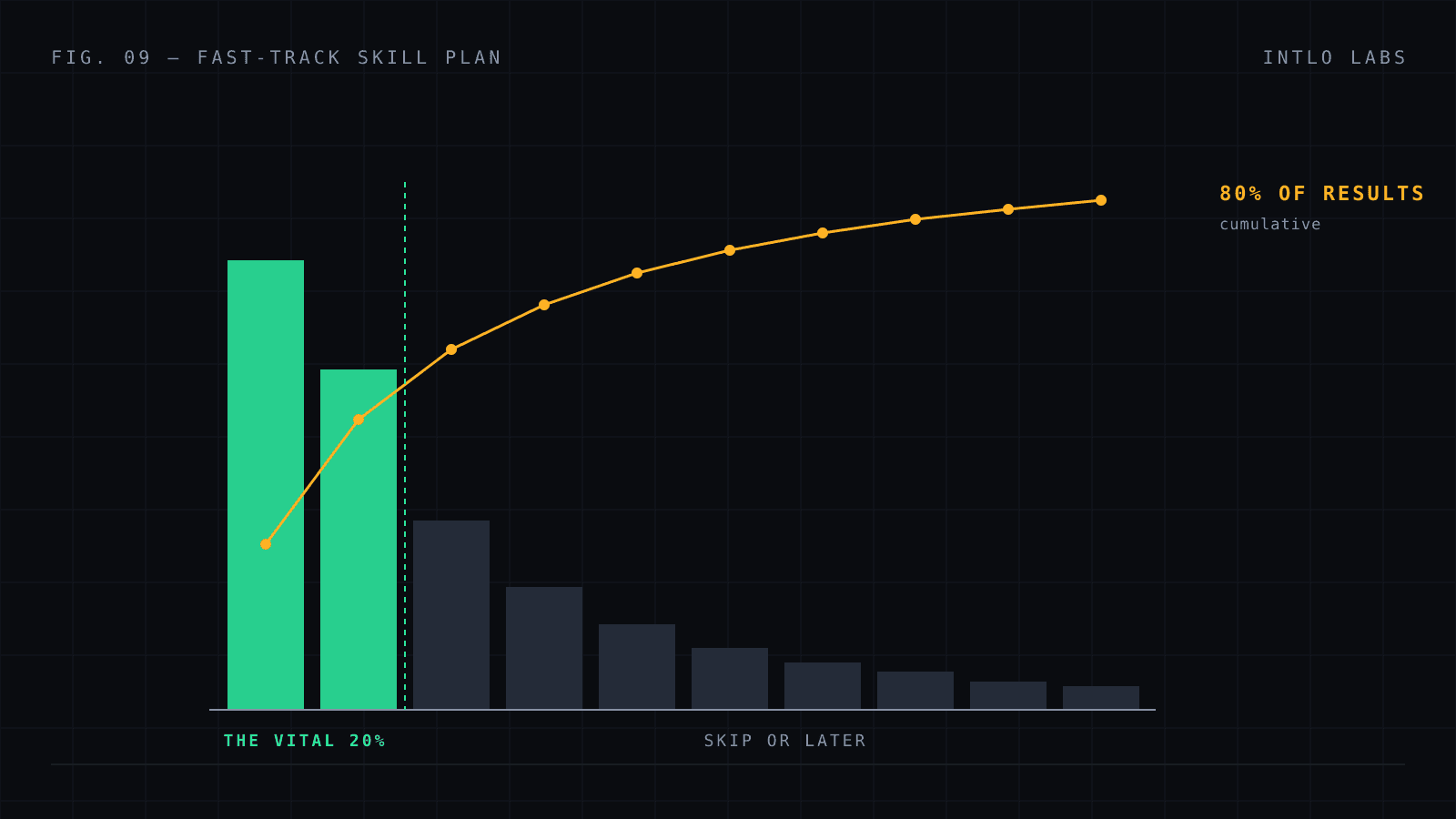
Was: 80/20 Hack to Get Good Stupid Fast. The 80/20 split depends on what you want the skill for. A conversational Spanish plan and a business-negotiation Spanish plan share very little of their vital 20%. Stating your level, goal and hours makes the plan yours, and the last line gets you started today.
I want to get good at [skill], fast.
Current level: [none / beginner / intermediate].
Goal: [what I want to be able to do, specifically].
Time: [hours per week] for [number of weeks].

1. Break the skill into sub-skills and pick the 20% that drives 80% of results for my goal. Explain why.
2. Name what beginners usually waste time on that I should skip.
3. Design a plan built on doing, not studying: real projects, fast feedback, deliberate practice.
4. Give me a week-by-week schedule with a milestone I can test at the end of each week.
5. Tell me the first thing to do in the next 30 minutes.
10 · Insight Distiller

Was: Wisdom Extraction Tool. "Five profound insights" without telling Claude what you already know gets you the five most-repeated ones. Tell it your starting point and your use case, ban the first page of search results, and ask for a ranking by how much each would change your decisions.
Topic: [topic].
What I already know: [a line or two, or "nothing"].
Why I care: [what I'll use it for].

Give me 5 insights about this topic that most people miss — not the textbook basics. For each:
- The insight in one sentence
- Why most people overlook it
- A concrete example
- What I should do differently because of it

Rank them by how much they'd change my decisions. Skip anything I'd find on the first page of a search.
Bonus · The Decision Gauntlet
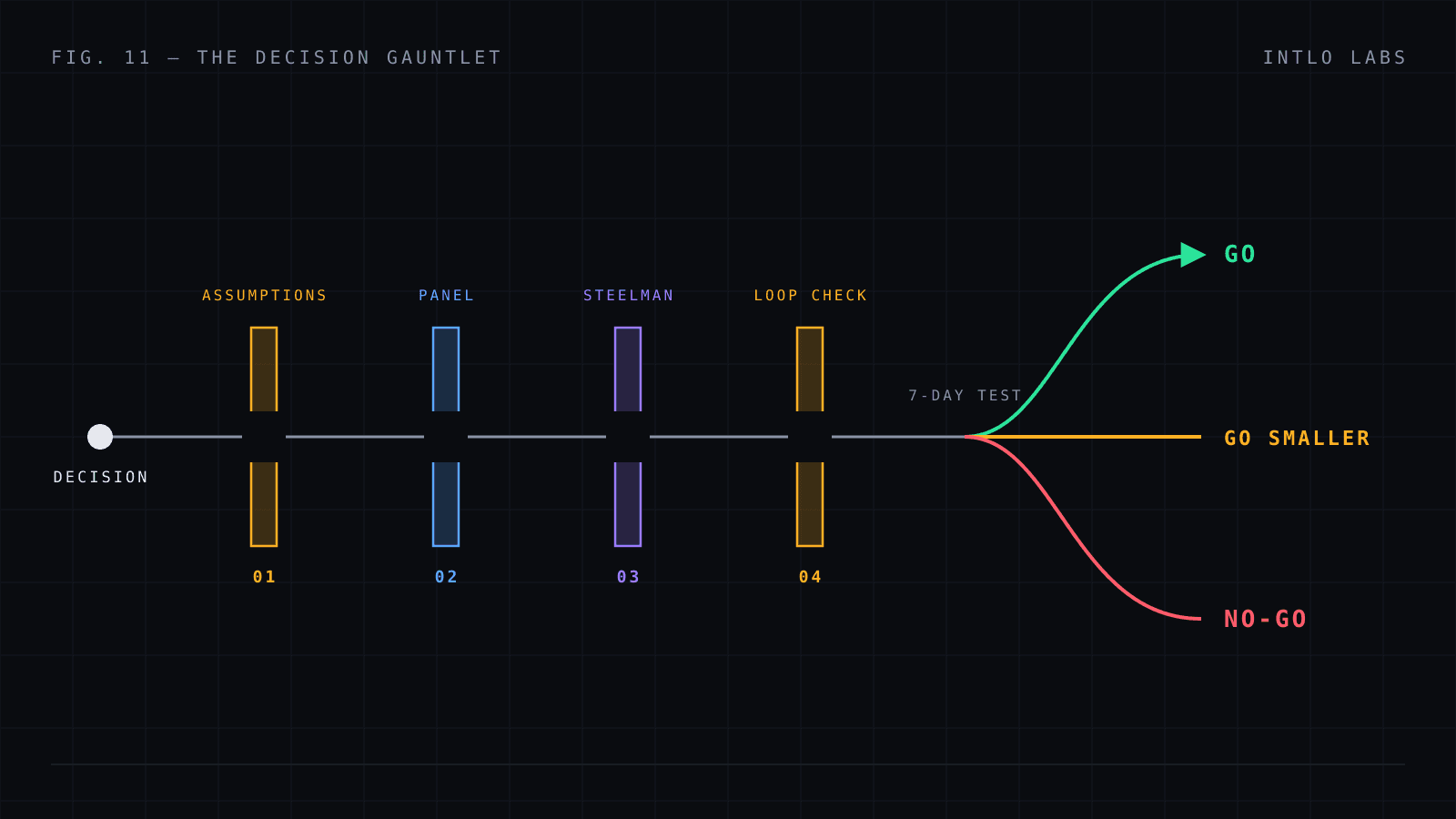
Run individually, the prompts above are good. Chained, they are much better. The Gauntlet puts a big go/no-go call — a new product, a client, a pivot — through four of them in one pass, and refuses to end on an opinion. It ends on the cheapest experiment that would settle the question.
I'm deciding whether to [decision].
Context: [2–4 lines on goal, constraints, deadline, money at stake].

Run it through this gauntlet, one section each, no hedging:
1. Assumption Breaker — list every assumption I'm making and attack the weakest three.
2. Expert Panel — a CFO, a customer, a competitor, an operator and a skeptical investor each give a one-sentence verdict and one question I haven't answered.
3. Steelman — the strongest case for doing the opposite.
4. Loop Check — does this look like a pattern I've repeated before? What would break it?
5. Verdict — Go / No-go / Go smaller, the one test I can run in 7 days to find out cheaply, and the number that would change your mind.
Bonus · The Prompt Upgrader
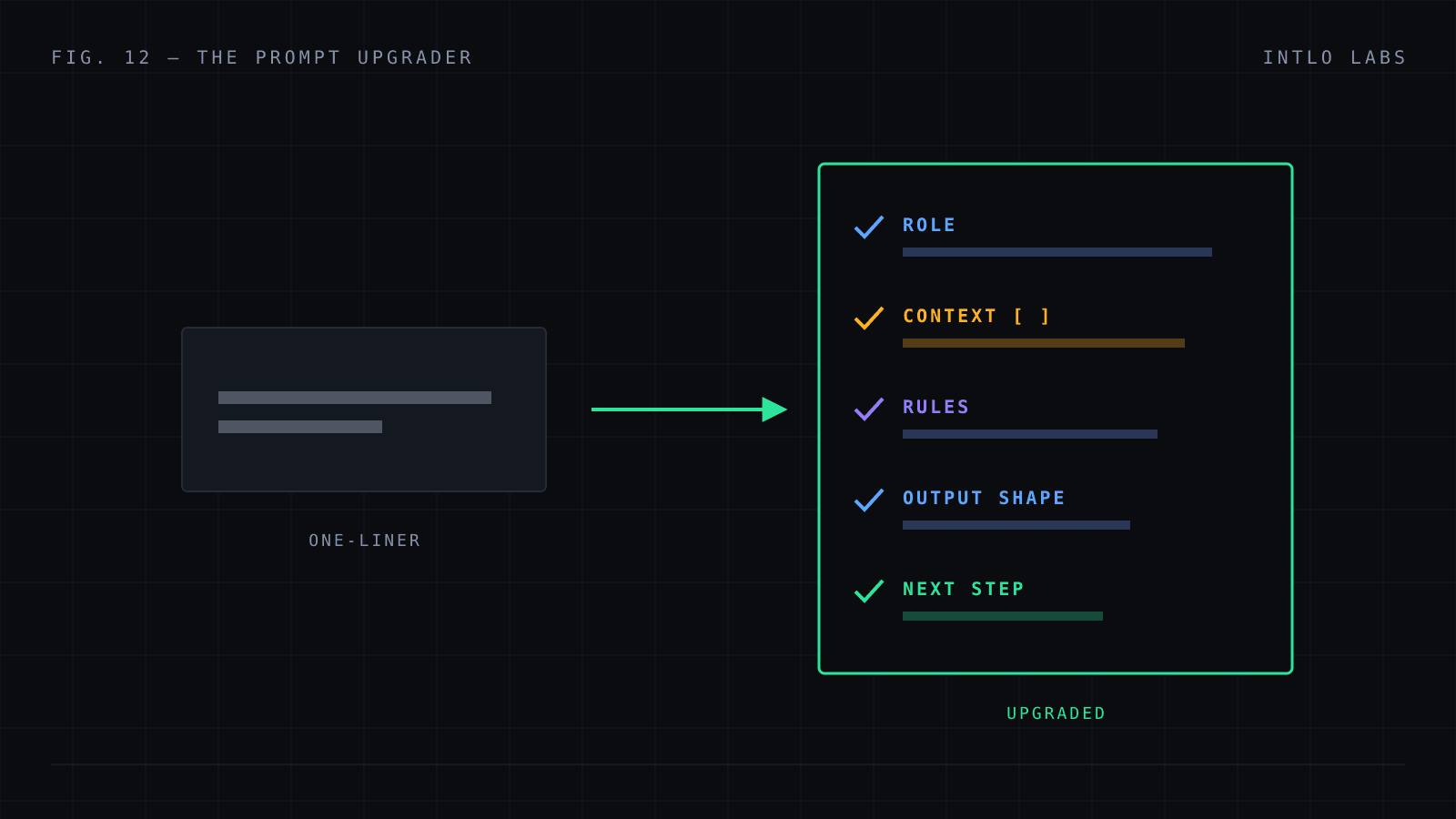
The method used on this page, as a prompt. The next time a list of clever prompts lands in your feed, paste each one through this before you use it.
Here's a prompt I want to use: [paste prompt].

Rewrite it so it gets a far better answer:
- Add the context Claude needs, with [brackets] for the blanks I should fill
- Give it a clear role and goal
- Specify the output format and length
- Add rules against generic or flattering answers
- End with a concrete next action

Show the upgraded prompt in a code block, then list in 3 bullets what you changed and why.
How to actually use these
Fill the brackets honestly. Two specific lines beat a paragraph of background. "I think we should raise prices 20% because churn hasn't moved in a year" gives Claude something to push on; "thinking about pricing strategy" does not.
Run them in order on one real problem. Profile yourself, break the assumption, convene the panel, then take the Gauntlet. Forty minutes, and you leave with a decision and a test rather than a pile of perspectives.
Save the ones you reuse. In Claude, a prompt you run every week belongs in a project's instructions or a skill, not in your notes app. The brackets become the only thing you type.
The theme across all twelve is the same: depth comes from what you give the model, not from adjectives like "profound", "extreme" or "world-class". Give it your actual situation, forbid it from flattering you, and make it end on a move.