WareTrack
LIVEA live isometric map of the fulfilment floor — every unit moving through ten stages from intake to the carrier dock, with agents that draft the next move and wait for a person to approve it.
WareTrack — the console on a sample facility
REPLAY · SAMPLE FACILITY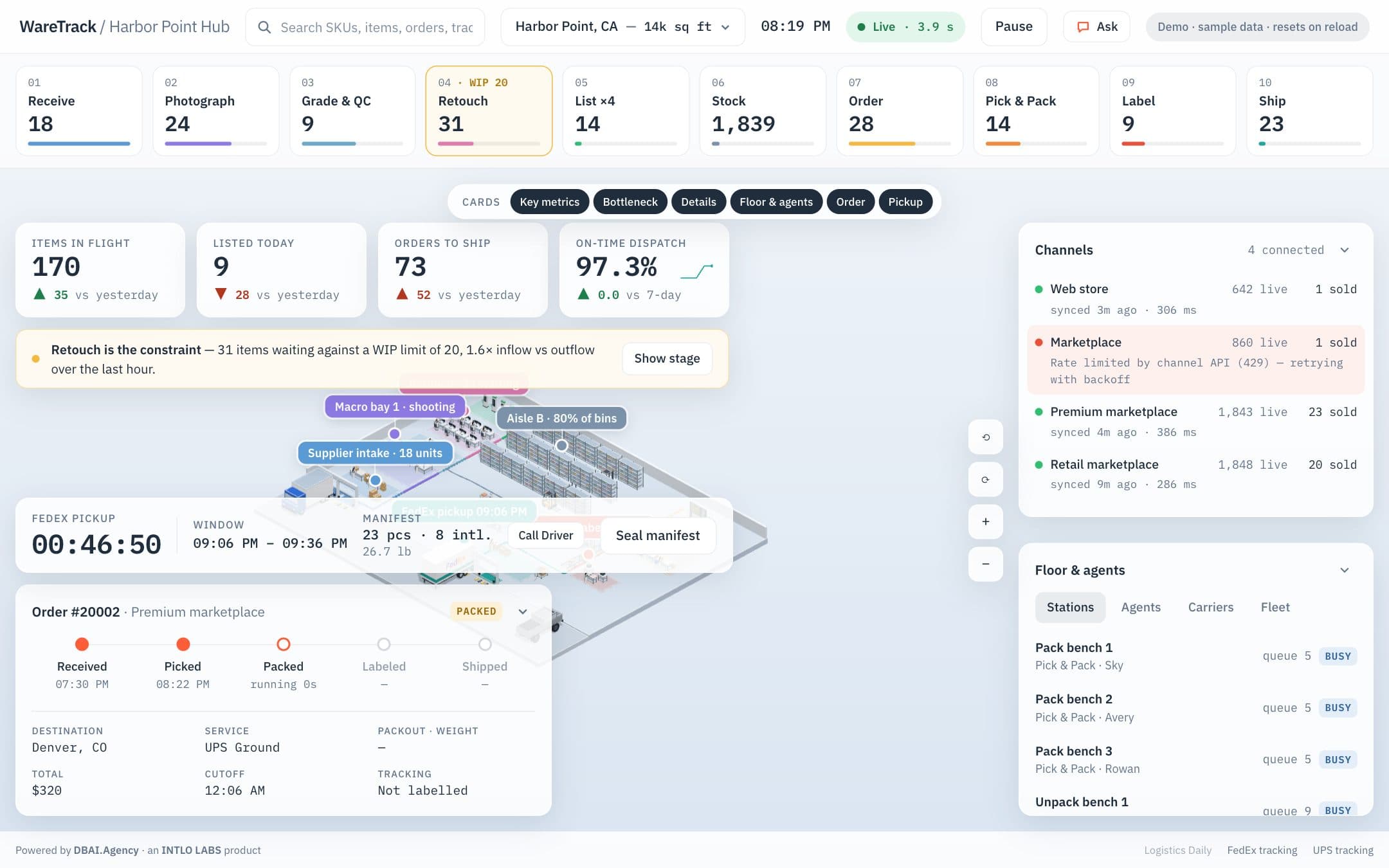
A fulfilment floor runs on a dozen screens: the intake sheet, the photo queue, the listing tool, the pick list, the label printer, the carrier portal. Each one is right on its own and none of them shows where the floor is jammed right now, which units are stuck and why, or whether today's pickup will leave full. The person who knows is the one walking the floor.
One live map of the facility. Units flow through ten stages — receive, photograph, grade, retouch, list, stock, order, pick and pack, label, ship — and work-in-progress limits flag the constraint as it forms. Click any station, rack, cart or unit for its history and the action that fits: hold, release, reshoot, reprice, seal the manifest. Five agents watch reorder points, the carrier pickup, tracking, channel sync and exceptions; they draft purchase orders and messages but never act without a person's click. A dispatch agent texts and calls the carrier driver, who confirms the pickup on the keypad. Ask WareTrack answers questions about the floor with read-only tools and offers changes as confirm cards. Facilities are parameters, not constants: one site runs imperial units and dollars, another metric units, pounds sterling and a 24-hour clock.
Built in eight phases and running at waretrack.intlo.com behind sign-in, on a database that sleeps when nobody is looking: the console is cached, the floor replays its own telemetry in the browser, and the agents run hourly at most. Carrier, text and voice integrations run in sandbox until live credentials are connected, and Ask WareTrack is waiting on its API key. The public demo at demo.waretrack.intlo.com is the same console on an anonymised sample facility with a generic catalogue and no database behind it — every action works in the browser, the assistant answers four questions from the sample data, and a reload starts it fresh.